



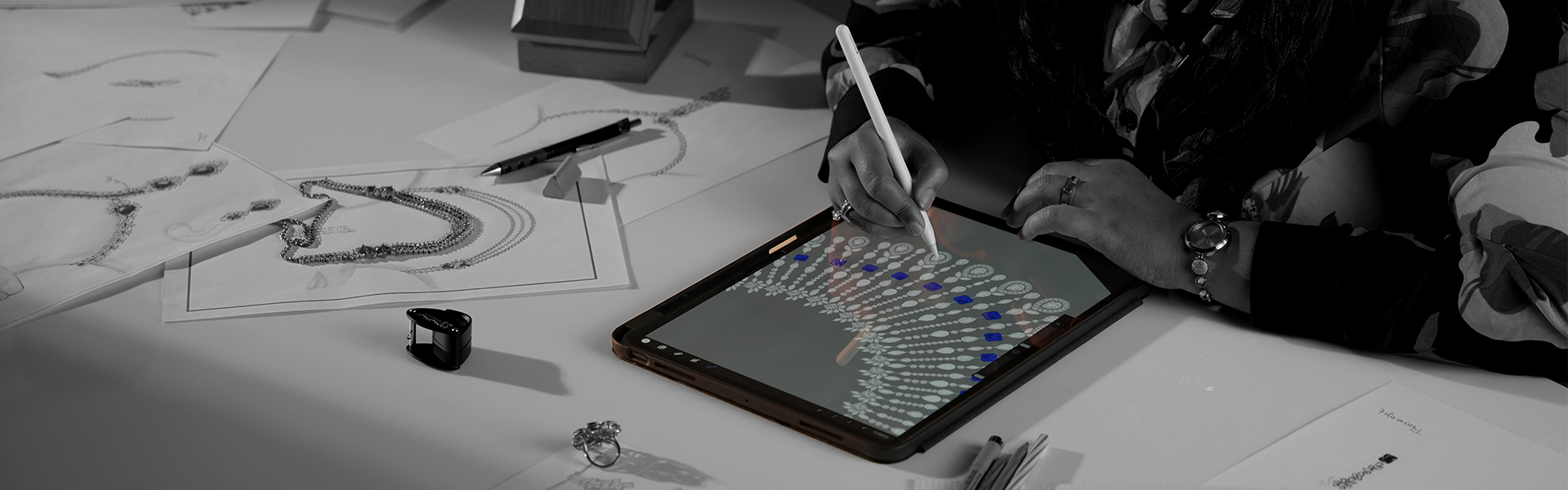

Lab Grown Diamond Jewellery Manufacturing Process
-
 1
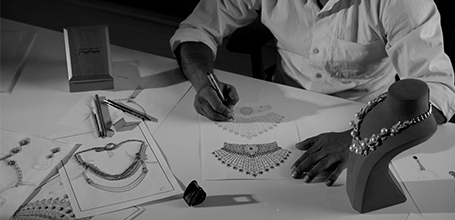
1Manual Designing
The jewellery creation process begins with manual designing, where skilled artisans craft intricate designs by hand, transforming creative concepts into initial sketches that guide the next stages.
-
 2
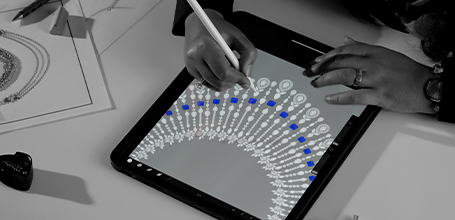
2CAM/ CAD Design
Once the manual design is finalized, it is converted into digital models using CAM (Computer-Aided Manufacturing) and CAD (Computer-Aided Design) software. This ensures precision and allows for virtual visualization before production begins.
-
 3
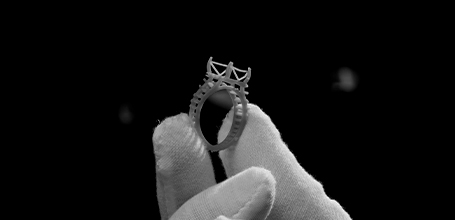
3Model Making
In model making, a 3D prototype of the jewellery piece is created from the CAD design, typically using wax or resin. This prototype serves as the basis for creating moulds used in mass production.
-
 4
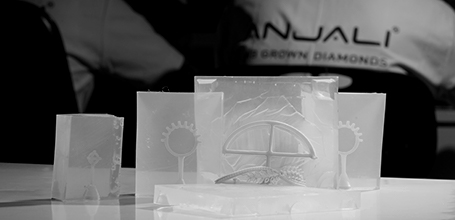
4Rubber Mould
The rubber mould is made from the wax prototype, capturing the fine details of the design. This mould will later be used to replicate the jewellery piece in larger quantities through the wax tree method.
-
 5
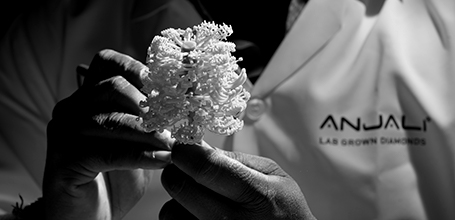
5Waxing / Wax Tree
In the waxing process, wax replicas of the jewellery are created from the rubber mould. These wax pieces are arranged on a wax tree to form a cluster, ready for casting.
-
 6
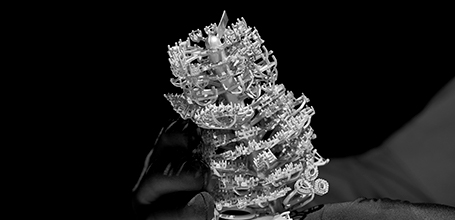
6Casting
During casting, the wax tree is placed in a mold and heated until the wax melts away, leaving a cavity. Molten metal is then poured into this cavity to form the jewellery piece in the desired metal.
-
 7
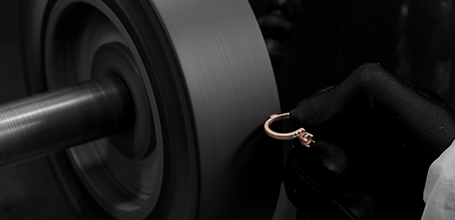
7Grinding
After casting, the jewellery undergoes grinding to remove excess metal and smooth rough edges. This step is crucial in refining the shape and preparing it for further finishing.
-
 8
8Filing and Pre-Polishing
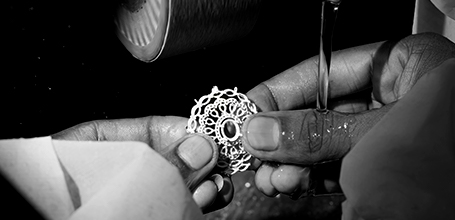
In the filing and pre-polishing stage, the jewellery piece is carefully filed to achieve its final shape. It then goes through pre-polishing to smooth the surfaces, ensuring it’s ready for setting and final polishing.
-
 9
9Metal Setting
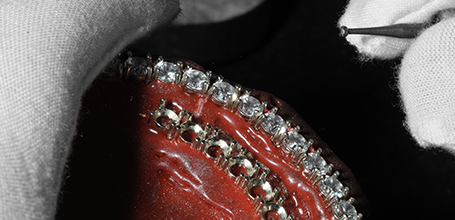
The diamonds and gemstones are securely placed into the jewellery during metal setting. This intricate process requires precision to ensure the stones are perfectly aligned and held in place.
-
 10
10Polishing
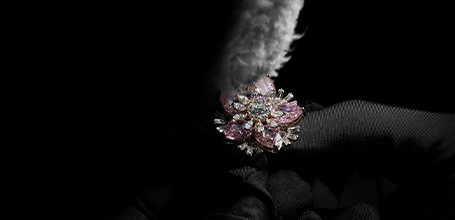
After setting, the jewellery undergoes polishing to enhance its shine and smoothness, giving it a flawless, lustrous finish.
-
 11
11Rhodium Plating
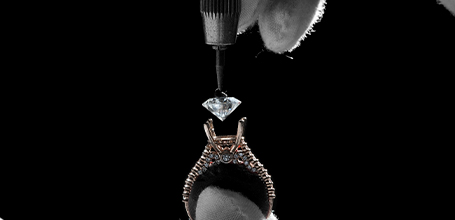
In the rhodium plating process, a layer of rhodium is applied to white gold or platinum jewellery to increase its shine and prevent tarnishing, giving the jewellery a bright, reflective appearance.
-
 12
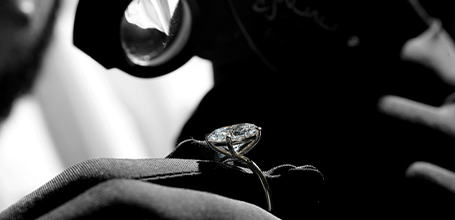
12Quality Control
Each piece is rigorously inspected during quality control to ensure it meets the highest standards of craftsmanship, durability, and design accuracy before it moves to the final stage.
-
 13
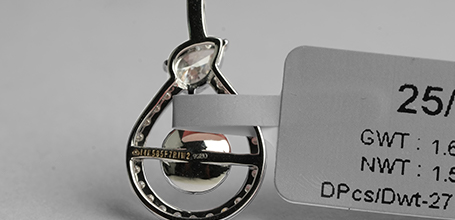
13Hallmarking
The jewellery is stamped with a hallmark to certify the purity and authenticity of the metal, ensuring compliance with industry standards and giving clients confidence in their purchase.
-
 14
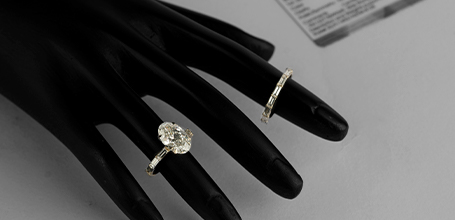
14Certification
Finally, the jewellery undergoes certification by recognized authorities to verify the quality and authenticity of the diamonds, ensuring transparency and trust for B2B clients.
